Emergency Air Conditioning Repair When the AC Quits
When the cooling quits on a July afternoon, the question is not what it costs — it is who is in the house and how hot it is getting. We tell you on the phone what to check before we roll, give you the number before we touch anything, and say honestly whether it can safely wait until morning.
Get a free estimateTell us what it’s doing — we’ll come back fast.
Emergency AC repair in Jacksonville
Emergency AC Repair for Jacksonville Families
We are a family company, and most of our emergency AC repair calls come from other families — a newborn in the house, someone looking after an elderly parent, a dog panting on the tile. The people who answer the phone here are the people who show up at the door. The CDC draws a real line at 90 degrees indoors, where a fan stops helping, and the city issues a Heat Advisory when the heat index reaches 108. So if your house is heading that way with a baby or an older parent in it, say so — it changes where you sit in our day. And if what you describe sounds like a breaker, a filter or a float switch, we will tell you that instead, and you get your evening back without a visit.
Great Dane Heating & Air has kept Jacksonville and Duval County comfortable for more than twenty years. We are a family company — the people who answer the phone are the people who show up — with upfront pricing, comfort techs who treat your home like their own, and a soft spot for shelter dogs. Every job we finish gives back to the Jacksonville Humane Society.
Some failures can safely sit overnight. These are the ones that should not, and the reasons are health and water damage rather than comfort. Tap whichever one sounds like your house.
This is the line the CDC draws: use fans only when the indoor temperature is below 90 degrees, because above that a fan can raise body temperature rather than lower it. If the thermometer in the house is past 90 and climbing, moving air around is no longer doing what you think it is doing.
The CDC notes that older adults are more likely to take prescription medicines that affect the body’s ability to control its temperature or sweat, and that infants and young children depend on other people to keep them cool. After Hurricane Irma, the CDC recorded fourteen heat-related deaths at a single Florida assisted-living facility left without power in hot weather. If that is your household, the calculation changes.
A stained ceiling under an air handler, a puddle in the closet, or a unit that keeps shutting itself off. The EPA’s guidance is that wet materials dried within 24 to 48 hours will in most cases not grow mold — which makes standing water a clock, not just a mess.
Turn the thermostat from cool to off and leave the fan running. The manufacturers are blunt about why: Trane tells owners that running the system with a frozen coil can cause major damage, and Carrier warns that ignoring a frozen coil can lead to severe compressor damage or total system failure. Thawing takes a few hours. Do not chip at it.
Reset it once. If it goes again, stop and leave it off. A breaker that will not hold is telling you something is drawing current it should not be, and repeatedly resetting it is how a bad contactor or a failing compressor becomes a burnt wire.
Ready.gov advises turning off or disconnecting equipment during an outage because power can come back with momentary surges or spikes that cause damage. If the unit went down with the power and will not come back, do not keep cycling it — and if any part of the equipment has been in flood water, it needs looking at before it is energised at all.
Cannot be combined with any other offer. One per household.
Our process
How an Emergency Call Actually Goes
No mystery, no pressure, and no work done before you’ve agreed to it.
01We triage on the phone first
How hot is it inside, who is home, and what is the unit doing. Then the short list worth checking before anyone drives out: the thermostat and its batteries, the breaker, the filter, the float switch, the outdoor disconnect.
02We tell you if it can wait
A capacitor on a mild evening is a different thing from no cooling at 96 degrees with a newborn in the house. We will say which one you have, and we would rather book you first thing than sell you an after-hours visit you did not need.
03We measure before we quote
Temperature split, static pressure, amp draw, and the charge. Then what actually failed, what it costs, and what it will do if you leave it — before anything is replaced.
04We get you cooling, then finish it properly
Sometimes that is one part and done. Sometimes it is getting the house down tonight and ordering what it really needs. Either way you know which one you are getting before we start.
The honest part
Three Things You’ll Be Told at 9pm, and What We’d Say Instead
A hot house at night is the easiest place in this trade to sell something. Here is where the standard pitch and the honest answer part company.
What you might hear
“At this age, you are better off replacing it tonight.”Almost nobody should buy a system in the dark, in a hot house, from whoever is standing there. What failed matters far more than the year on the plate.
“It is low on refrigerant — we will top it off.”A sealed system does not consume refrigerant. If it is low, it is leaking, and a top-off is a bill you pay again next summer with the leak still there.
“Your system runs R‑410A, so it is done.”Not true. The EPA restriction applies to new equipment; the agency states plainly that components used to repair existing systems are not subject to it. Repairing your R‑410A system is legal.
What we’ll tell you
“Let us get you cool tonight and price the rest in daylight.”A temporary fix that gets the house down is not a lost sale to us. It is how you make a replacement decision with a clear head.
“If it is low, we find the leak.”Opening the refrigerant circuit is EPA-certified work either way, so the visit is the same visit. The difference is whether you get a repair or a refill.
“That is a contactor, not a funeral.”Most of what fails on a July night is a part, not a machine. We will tell you when it genuinely is the machine.
Equipment rarely quits in April. It quits when it is working hardest, and in Jacksonville that is a longer stretch than most of the country. Four reasons the calls come in a bunch — and where each one lives on your system.
78°Set to 78° — nine months a year
Run hoursIt fails under load, not at rest
A normal July here averages a high near 92 degrees, with two dozen days at or above 90. A marginal capacitor holds up fine until the system runs all day — then it fails on the hottest afternoon of the week.
The waterIt shuts itself off on purpose
Your system pulls gallons of water out of the air here. When the drain blocks, Florida code requires a shutoff that stops the equipment before water reaches the building. A unit gone quiet with a full pan is protecting your ceiling, not broken.
Salt airCapacity slips before it quits
From the beaches through the Intracoastal, salt attacks the condenser coil and the fins around it. The unit does not stop; it just stops keeping up, and the first hot week it cannot keep up is the week you notice.
StormsIt comes back wrong
Ready.gov warns that power may return after an outage with momentary surges or spikes that can cause damage, which is why so many no-cool calls arrive the day after weather — not during it.
Whatever it is doing
No Cool, No Power, Water, or Ice
Systems that will not start, systems that run and will not cool, breakers that will not hold, frozen coils, condensate shutoffs, and units that went down with the power — on central systems, heat pumps and mini-splits, in Jacksonville and across Duval County.
A working air conditioner is comfort. A system looked after properly is something closer to peace of mind — especially in a Jacksonville August, and especially with small people in the house.
Vetted people in your home
Florida state certified — licence CAC036942 — fully insured, and BBB accredited at an A+ rating. The same small crew every time, not a rotating list of subcontractors.
The air they breathe all day
Florida humidity does not just make a house uncomfortable — it feeds what grows in it. Filtration, purification and humidity control keep the air in your rooms clean as well as cold.
Fixed right the first time
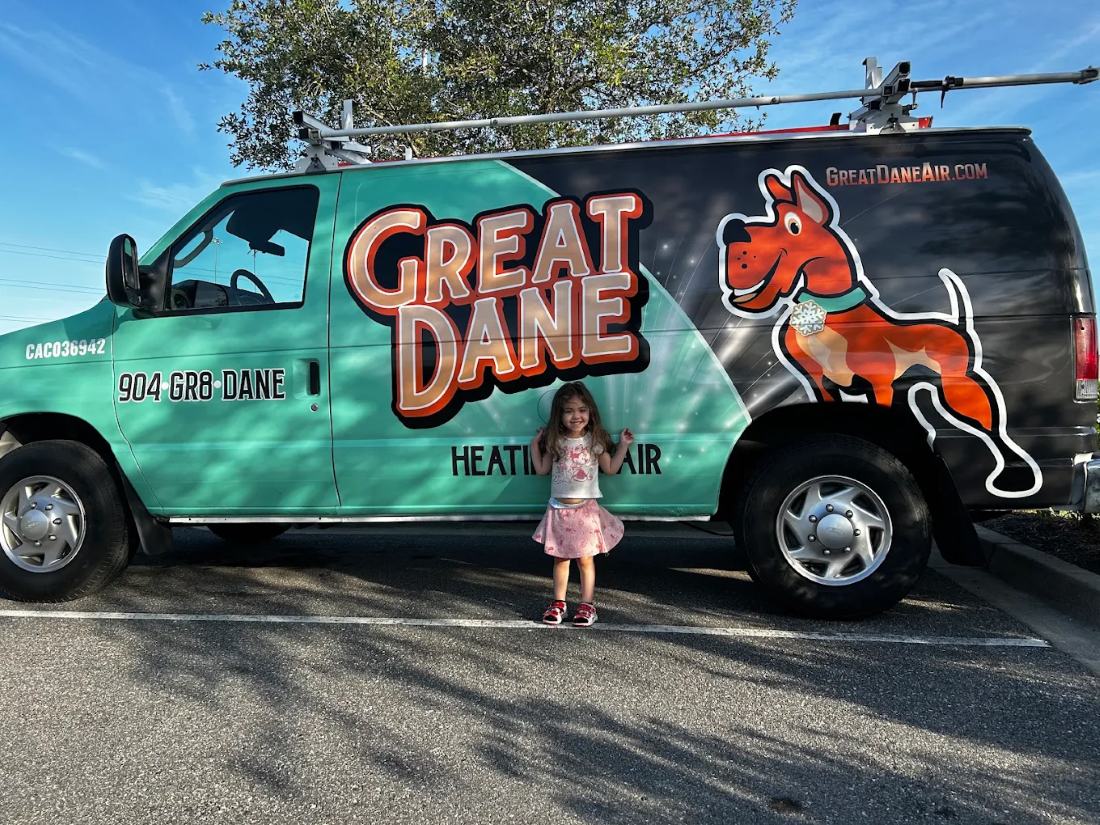
We show you the failed part, quote the whole number before we start, then test the system and clean up behind us. Our work is guaranteed — that is the whole point of the name on the truck.
Free estimate, honest answer.Tell us what your system is doing and we’ll tell you what it actually needs.
Paul came out and replaced our blower motor and saved the day. He fielded my call on Sunday evening, then did the service Monday afternoon. Friendly, efficient, and professional.
After years of feeling vulnerable to dishonest HVAC companies, a neighbor put me in touch. He quickly earned my trust — quick to return calls, reasonable rates, and he’s never tried to sell me things I don’t need.
We’ve used him for everything from small tweaks to replacing our entire unit. Quick, reliable, honest, and clean — and he beat the prices of every competitor. Yes, we priced out seven.
Fast and efficient, unbelievably affordable pricing. He quickly figures out the problem and explains it in a way anyone can understand. You automatically feel like you can trust him.
Our A/C went down and the team showed up Monday morning first thing. We had cool air flowing in no time. The crew was fast, clean, and finished under time.
Mike and the team were very professional, friendly, and knowledgeable. The price was not unreasonable. So happy we found this company — we know we will be taken care of in the years to come.
Just had Great Dane install a new A/C in my home. Mike came to my home, saw what I had, and I told him what I wanted installed. There was absolutely no sales pressure.
Mike came out and gave an estimate with no fluff, which is what I like. He was honest and professional. The team that installed the unit worked well together and the work performed was stellar!
My experience was beyond my expectations. They did an amazing job replacing my antique air conditioner! Mike gave me a great quote and DJ and his son completed this challenging job amazingly well.
Our outdated A/C system went down for good and I had called multiple other companies with little to no response. I called Great Dane and Mike was at my house in less than 15 minutes.
So glad I went with Great Dane to service my a/c. I highly recommend Quentin, who serviced the unit. He is extremely knowledgeable, highly competent, and up front about potential issues.
I’d been without A/C for quite some time. It was amazing — the care and concern that Mike (and MJ & Brandon) had about my situation. I know I chose the right company.
Straight answers, no jargon — including the ones that cost us money to answer honestly.
What should I check myself first?+
Five things, in this order, and any one of them can end the call. The thermostat: is it set to cool, is the setpoint below the room, and does it need batteries. The breaker: has it tripped, and reset it once only. The filter: a filter packed solid can freeze a coil and stop cooling entirely. The float switch or safety pan under the air handler: if the drain has blocked, a full pan will shut the system off deliberately. And the outdoor disconnect, the small box by the condenser, which sometimes gets pulled and not put back. If one of those was it, you have your evening back.
The coil is frozen solid. Should I run it anyway?+
No. Turn the thermostat from cool to off, leave the fan set to on, and let it thaw — Carrier puts that at roughly one to four hours. Trane states plainly that running the system with a frozen coil can cause major damage, and Carrier warns of severe compressor damage or total system failure. While it thaws, change the filter and open every supply register, because restricted airflow is the most common cause. If it freezes again after that, it is airflow or refrigerant, and both need a technician.
It shut itself off and nothing looks wrong.+
That is often the condensate safety doing its job. Florida’s mechanical code requires overflow protection where water could damage the building, and on equipment without a secondary pan that means a water-level device inside the primary drain pan that shuts the equipment off if the drain becomes restricted. So the system going quiet with no error and no water on the floor is usually the switch stopping it before the ceiling got wet. It is a drain call, and normally a quick one.
Can I just add refrigerant to get through the night?+
You cannot, and not only for safety reasons. The EPA restricts refrigerant sales to certified technicians, and states that any person servicing, installing or disposing of stationary appliances must be a Section 608 certified technician. So a homeowner cannot legally buy it or put it in. The more useful point is that a sealed system does not use refrigerant up. If it is low, there is a leak, and adding more without finding it is money spent on next summer’s problem.
How hot is too hot to wait?+
There is no single legal number, but there are useful ones. The CDC advises using fans only when the indoor temperature is below 90 degrees, because above that a fan can raise body temperature instead of lowering it — so 90 inside is a real line. Outdoors, Jacksonville issues a Heat Advisory at a heat index of 108 to 112 and an Extreme Heat Warning at 113 or higher, and the National Weather Service classes a heat index of 103 and above as Danger, where heat exhaustion is likely and heat stroke is possible with prolonged exposure. If it is one of those days and the house is climbing past 90, treat it as urgent.
Who is most at risk in a hot house?+
The CDC points to older adults, who do not adjust as well to sudden temperature changes, are more likely to have a chronic condition that changes the normal response to heat, and are more likely to be on a prescription that affects the body’s ability to control its temperature or sweat. Infants and young children are the other group, because they rely entirely on someone else to keep them cool. The reason this is not abstract in Florida: after Hurricane Irma, the CDC recorded fourteen heat-related deaths among elderly residents with chronic disease at one Florida assisted-living facility that lost power for several days in hot weather. Tell us if that is your household, and it changes where you sit in the day.
Can it wait until morning?+
Often, yes, and we will tell you when. A mild evening, a house that is holding in the low eighties, and healthy adults is a morning appointment. Ninety-plus indoors, an infant or an older parent in the house, water actively coming through a ceiling, or a breaker that will not hold are not. We would rather book you first thing than sell an after-hours visit that buys you nothing but a shorter night.
The power went out and now the AC will not start.+
Ready.gov advises turning off or disconnecting equipment during an outage, because power may return with momentary surges or spikes that can cause damage. If yours was running when the lights went, that surge is the first suspect. Leave it off at the thermostat, wait until the supply is genuinely stable rather than flickering, then bring it back on deliberately. If it trips the breaker on the way back, stop there and leave it off for us.
The outdoor unit was in flood water.+
Do not energise it. Equipment that has been submerged needs inspecting before it is powered, and that includes the disconnect and the wiring, not just the machine. Tell us how deep it got and how long, and leave the breaker off until someone has looked.
Why should I not open the outdoor unit myself?+
Beyond the obvious, there is a capacitor in there that stores an electrical charge and can hold it after the power is off. That is the part that catches people who assume the breaker made everything safe. If you are comfortable pulling the disconnect and looking for something obvious — a wasp nest in the fan, a tree limb across the coil — that is fine. Panels off is a different job.
How do I know the person showing up is licensed?+
Ask for the number and check it. Great Dane holds Florida licence CAC036942, and you can look it up free on the state’s licensing portal by name or licence number. It is worth knowing what the words mean, too: under Florida law a certified contractor holds a certificate of competency from the state and may work anywhere in Florida, while a registered contractor may only work in the jurisdiction that registered them. Florida also requires a contractor to subcontract electrical, mechanical, plumbing, roofing, sheet metal and air-conditioning work unless they hold a certificate or registration in that trade — which is the honest answer to a handyman offering to sort out your AC.
Can you handle the electrical side, or do I need an electrician?+
For the dedicated circuit that already serves your equipment, we can. Florida law specifically lets an air-conditioning contractor replace, disconnect or reconnect power wiring on the line or load side of the existing dedicated disconnect on single-phase systems, and repair or replace power wiring, disconnects, breakers or fuses for dedicated HVAC circuits, using a circuit breaker lock. What that does not cover is new circuits or work elsewhere in the panel, which belongs to an electrical contractor. If your problem turns out to be on that side of the line, we will say so rather than reach past it.
Will you try to sell me a system while I am hot and tired?+
No. If the system genuinely is finished we will tell you, and we will still get you through the night if there is a way to. Replacement is a daylight decision with numbers in front of you, not something to sign at nine at night in a house that is 94 degrees.
One call covers the rest of the house.This page is one job. These are the others.

 BBB accredited business